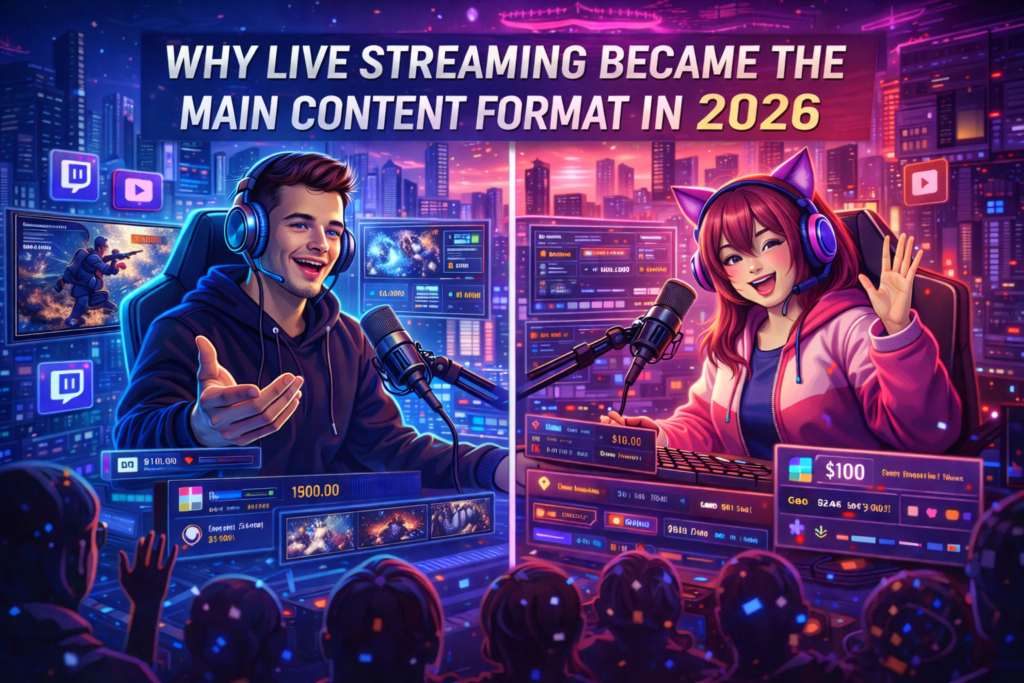
Streaming in 2026: How Live Content Overtook Video and Social Media
Ten years ago, streaming was seen mainly as entertainment for gamers and niche communities. By 2026, the situation has completely changed. Streaming has become the main content format, overtaking traditional videos, written content, and even short-form clips. More and more people choose live streams over pre-recorded content — and there are clear reasons behind this shift.
Today, streams are watched not only for gaming. People discuss news, learn new skills, work, relax, and socialize on streaming platforms. Streaming is no longer just a genre — it has become a universal form of digital presence.
Why Streaming Became the Main Content Format
The primary reason for the growth of streaming is a change in audience behavior. By 2026, users have grown tired of “perfect” content — polished photos, overproduced videos, and scripted performances. Viewers want a sense of reality, something happening here and now.
Streaming delivers exactly that. In a live broadcast, there is no pause for editing and no chance to rewrite an awkward moment. Mistakes, emotions, and reactions happen in real time. This is why streaming feels more honest and authentic than other content formats.
In addition, live streams create a sense of personal presence. Viewers are not just watching — they are participating. They can send messages, ask questions, and influence what happens on screen. No other content format offers this level of engagement.
Streaming and Audience Trust in 2026
In 2026, trust has become the most valuable currency on the internet. People trust traditional advertising less and rely more on real personalities. Streaming fits perfectly into this new reality.
When viewers spend hours watching a streamer, hearing their thoughts and seeing genuine reactions, a sense of personal connection forms. The streamer is no longer a faceless creator, but someone familiar. This is why streaming has become the strongest format for building a loyal audience.
Streaming is also difficult to fake. It is hard to maintain a false persona for long in a live environment. Audiences quickly sense insincerity, which makes live content feel more authentic and trustworthy.
Why Streaming Outperforms Video and Short-Form Content
Despite the popularity of short-form videos, in 2026 they increasingly play a supporting role. Shorts, Reels, and clips attract attention, but streaming keeps audiences engaged.
Recorded video is a finished product — viewers watch it and move on. A stream, on the other hand, is an ongoing process. It can last for hours, creating emotional attachment. Viewers return not for a specific clip, but for the person and the atmosphere.
Streaming also fits better into modern lifestyles. It does not require constant focus. Streams can run in the background while people work or relax, making the format more flexible and convenient.
The Streaming Economy: Why It Benefits Creators
By 2026, streaming has become one of the most sustainable content monetization models. The reason is simple: revenue is directly tied to audience engagement.
Subscriptions, donations, paid interactions, and brand integrations all work more effectively in live broadcasts. Viewers feel the moment and are more likely to support a creator in real time.
Streaming also lowers the barrier to entry. Creators do not need large production teams or complex post-production workflows. A consistent schedule, a clear format, and regular broadcasts are enough. This is why streaming has become the main content format not only for major creators but also for newcomers.
Platform Algorithms and the Growth of Streaming
Platform algorithms play a significant role in the rise of streaming. In 2026, Twitch, YouTube Live, and other platforms actively promote live content because it keeps users within the ecosystem longer than other formats.
The longer viewers stay on a platform, the more valuable that platform becomes. Streaming solves this problem perfectly. As a result, algorithms favor live broadcasts, especially those with strong audience retention and active chat interaction.
This has made streaming not only popular, but also algorithmically advantageous.
The Social Impact of Streaming
In 2026, streaming also serves an important social function. For millions of people, live streams have partially replaced offline communication. This is especially noticeable in a world shaped by remote work and digital lifestyles.
Streaming creates a sense of community. Regular viewers recognize each other, inside jokes form, and shared rituals develop. This type of social connection is difficult to replicate through traditional video content.
That is why streaming has become the main content format for people who want more than passive consumption — they want to be part of an experience.
Why Streaming Is Not a Temporary Trend
Skeptics still describe streaming as a passing trend. However, by 2026 it is clear that streaming represents a structural shift in media, not a short-lived hype.
It solves several core challenges at once: live interaction, trust-building, audience retention, monetization, and reduced creator burnout thanks to flexible formats.
Streaming has not replaced other content formats, but it has become the central element of the modern content ecosystem. Videos, clips, and social media increasingly support live streams rather than compete with them.
Why Streaming Became the Main Content Format in 2026 and What Drives This Trend
Streaming became the main content format in 2026 because it perfectly matches the expectations of modern audiences. It is live, authentic, interactive, and adaptable.
People no longer want to simply watch content — they want to participate. Streaming provides a sense of presence, dialogue, and real connection.
In an oversaturated content market, success belongs not to the loudest creators, but to those closest to their audience. Today, streaming is the shortest path to that trust.