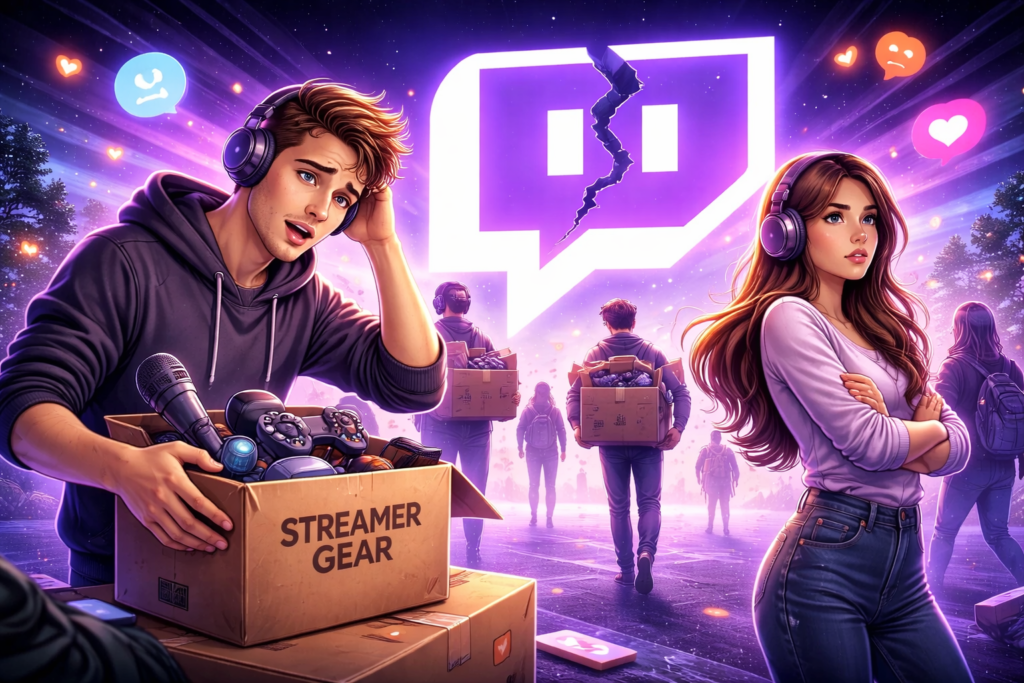
Twitch Is No Longer the Obvious Choice for Streamers
Just a few years ago, Twitch was considered the default platform for live streaming. New streamers automatically started there, while established creators built their entire careers around Twitch. By 2026, this situation has changed significantly. More and more streamers — from small channels to well-known names — are deliberately leaving Twitch or reducing their presence on the platform.
It’s important to understand that streamers are not “fleeing” Twitch because of a single decision or controversy. The reasons run much deeper. The shift is driven by structural changes in the streaming ecosystem, content economics, and audience behavior. Twitch remains a major platform, but for many creators, it is no longer the best place to grow.
Why Twitch Has Become a Difficult Platform for Growth
The main complaint streamers have about Twitch in 2026 is the lack of organic discovery. The platform’s algorithms are structured in a way that new or small channels receive almost no visibility without external traffic. If a streamer has no viewers, their stream simply disappears deep within the category listings.
Unlike other platforms, Twitch barely functions as a recommendation engine. It does not actively test new channels with audiences and instead prioritizes streams that already have viewers. This creates a closed loop: to get viewers, you already need viewers.
For many streamers, this becomes a point of frustration. They stream consistently, invest in content quality, yet see no meaningful growth for months.
Twitch’s Monetization Model Has Lost Its Appeal
In 2026, Twitch’s financial model raises increasing concerns. Streamer income heavily depends on subscriptions and donations, while the platform still takes a significant cut. For small and mid-sized channels, this results in unstable and hard-to-predict earnings.
Additionally, Twitch provides very limited support for monetization beyond subscriptions. The platform is poorly integrated with short-form content, converts views into long-term value inefficiently, and offers few tools for scalable income growth.
As a result, streamers increasingly compare Twitch to alternatives — often not in Twitch’s favor.
Burnout as a Hidden Reason Streamers Leave Twitch
One of the most underestimated reasons streamers leave Twitch is emotional burnout. The platform encourages long streams, strict schedules, and constant live presence, while offering no guarantee of growth — even with high effort.
A streamer can go live for months, maintain a stable schedule, and still see no progress. This creates a feeling of an endless grind where effort does not translate into results.
By 2026, more creators are consciously choosing platforms and formats that allow them to work less but more efficiently. Twitch is increasingly perceived as a platform with high effort costs and low return.
Why Streamers Are Choosing Other Platforms
Leaving Twitch does not always mean leaving streaming entirely. More often, it means redistributing focus. Streamers move to platforms where:
- algorithmic discovery exists,
- content continues to perform after the live stream ends,
- audience growth is easier to scale,
- income streams are more diversified.
YouTube enables growth through recommendations and turns streams into long-lasting content. Kick attracts creators with more favorable conditions and better visibility for new channels. TikTok and Shorts have become the main sources of new audiences — something Twitch has failed to provide.
The Changing Role of Streaming in a Creator’s Career
In 2026, streaming is no longer the sole center of a creator’s content strategy. Increasingly, live streams are just one part of a broader ecosystem. Short videos, clips, social media, and communities work together.
Twitch, however, still operates under an “everything stays on the platform” mindset. This limits flexibility and makes it harder for creators to build a sustainable brand beyond Twitch.
Why Even Large Streamers Are Losing Loyalty to Twitch
Even successful creators are rethinking their relationship with Twitch. Dependence on a single platform has become too risky. Any change in algorithms, rules, or monetization policies can instantly impact income.
Large streamers increasingly adopt hybrid strategies or fully migrate to other platforms. This is not protest — it is pragmatic risk management.
Leaving Twitch Is Not a Collapse, but an Evolution
Streamers are not leaving Twitch because the platform is “bad.” They are leaving because the market has changed. In 2026, creators who win are those who can distribute audience attention and avoid reliance on a single traffic source.
Twitch remains strong for creators who already have a stable audience. But for experimentation, growth, and long-term brand building, it is increasingly уступed by competitors.
Why Streamers Continue to Leave Twitch
The main reason streamers leave Twitch in 2026 is the growing gap between expectations and reality. The platform demands time, energy, and loyalty, but offers fewer opportunities for growth in return.
Streamers move to places where effort scales, content lives longer than a single stream, and there is a clear sense of forward momentum. Until Twitch solves its visibility, monetization, and flexibility issues, this trend will only intensify.