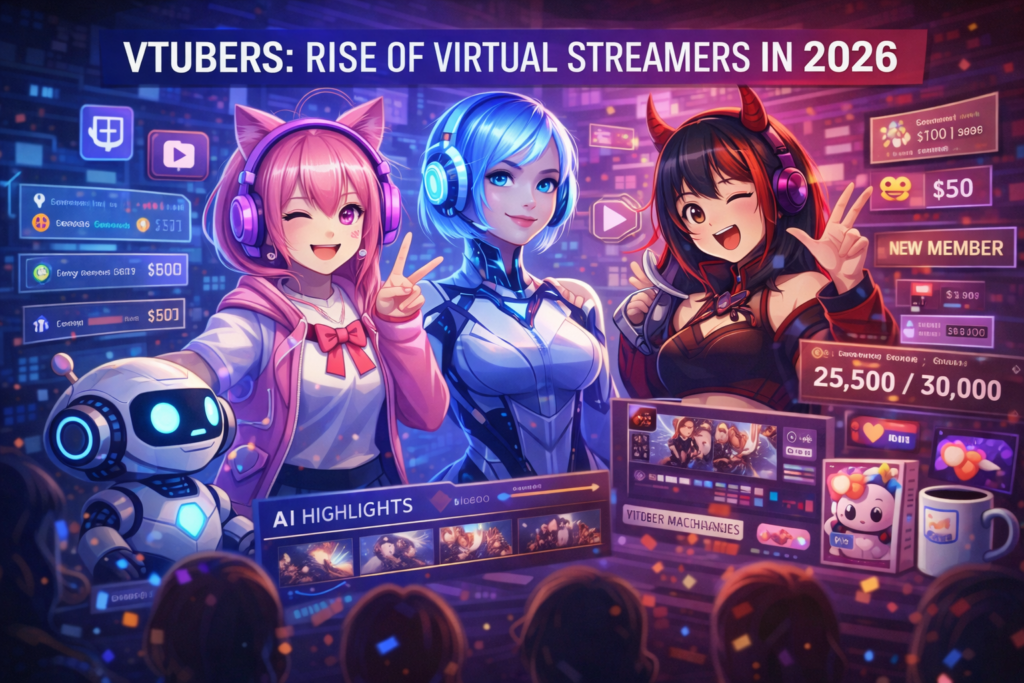
Just a few years ago, virtual streamers were seen as an exotic niche for a limited audience. VTubers were closely associated with anime culture, Japanese platforms, and experimental content. By 2026, however, the situation has changed dramatically. Virtual streamers are no longer a niche format — they have become a full-fledged segment of the streaming industry, rapidly growing on Twitch, YouTube, and emerging platforms.
The rise of VTubers in 2026 is not a short-term hype cycle or a passing trend. It is the result of shifts in audience behavior, technological progress, and the evolving economics of streaming. More viewers are deliberately choosing virtual streamers, while creators themselves see VTubing as a new opportunity for growth and monetization.
Why VTubers Are No Longer a Niche
The main reason behind the popularity of virtual streamers is audience fatigue with repetitive formats. The classic “person in front of a webcam” stream no longer delivers the same sense of novelty. When thousands of channels look visually identical, a virtual avatar immediately stands out in recommendation feeds.
A VTuber is not just a mask or an avatar. It is a fully developed character with personality, voice, communication style, and often a backstory. For viewers, this feels like a live, ongoing series where every stream is a new episode. This format holds attention more effectively and builds stronger emotional attachment.
Virtual streaming also lowers the entry barrier for creators. Not everyone feels comfortable being constantly on camera, managing appearance, or maintaining emotional energy. VTubing removes these constraints and allows creators to focus entirely on content.
How Technology Turned VTubers Into a Mass Phenomenon
The growth of VTubers would not be possible without major technological advances. By 2026, virtual streaming tools have become more accessible, stable, and affordable. What once required complex rigs and professional teams can now be run on a home PC.
Modern tracking systems accurately capture facial expressions, emotions, and movements, making virtual characters feel “alive.” For viewers, the line between a real streamer and a VTuber is increasingly blurred — presentation and charisma matter more than physical presence.
Streaming algorithms also play a role. Twitch and YouTube respond well to visually distinctive content. VTuber streams tend to generate higher click-through rates, stronger early retention, and better subscription conversion, especially during the first minutes of a broadcast.
VTubers and Audience Retention
In 2026, audience retention has become one of the most important indicators of streamer success — and this is where VTubers have a clear advantage. A character-driven format enables deeper viewer connection than traditional streaming.
Viewers return not just to a streamer, but to a persona. VTubers naturally develop lore, recurring jokes, signature reactions, and recognizable show elements. This creates a sense of belonging to an exclusive community, directly increasing viewer loyalty.
Virtual formats also help reduce emotional burnout. Streamers can adjust the character’s mood, tone, or even persona without breaking audience expectations, making long-term content production more sustainable.
Monetization of Virtual Streamers in 2026
The rise of VTubers is closely tied to monetization. In 2026, virtual streamers earn as much — and sometimes more — than traditional creators.
First, VTuber audiences are more likely to perceive donations as support for the character rather than a specific individual. This lowers psychological barriers and turns donations into part of the show rather than simple gratitude.
Second, virtual characters scale exceptionally well. The same persona can be used across clips, Shorts, merchandise, brand integrations, and even game collaborations. For brands, working with virtual characters reduces reputational risk and provides greater control over image.
Third, VTubers benefit from long-term brand value. Characters do not age, fall out of trends, or lose relevance — they evolve alongside their audience.
Western Markets and the CIS: Different Speeds, Same Trend
In Western markets, VTubers have already entered the mainstream. By 2026, virtual streamers consistently rank among the top channels in terms of concurrent viewers and engagement, especially in entertainment and talk-based formats.
In the CIS region, growth is slower but noticeable. Conservative audience preferences and weaker character-driven content traditions have delayed adoption, but the situation is changing. Younger viewers embrace virtual formats faster, and creators increasingly use VTuber personas to stand out in a saturated market.
Notably, many CIS VTubers begin with hybrid formats — combining real-life streaming with virtual avatars. This reduces risk and helps audiences gradually adapt.
Why VTubers Are Not a Temporary Trend
Skeptics often compare VTubers to past hype-driven formats. Yet by 2026, it is clear that virtual streamers solve real industry challenges. They improve audience retention, reduce burnout, increase monetization potential, and enable scalable branding.
VTubing is not a replacement for traditional streaming — it is its evolution. It expands the definition of what a streamer can be and how audiences engage with content.
The Future of Virtual Streamers
In the coming years, VTubers will become even more deeply integrated into the streaming ecosystem. Advances in AI, interactive avatars, and personalized content will accelerate this trend.
At the same time, the core success factor will remain unchanged: personality. Even behind a virtual avatar, viewers seek emotion, authenticity, and genuine interaction. The VTubers who understand this are shaping the next wave of streaming in 2026.
Virtual streamers are no longer an experiment. They are a mature format that has already reshaped the industry — and will continue to do so in the years ahead.