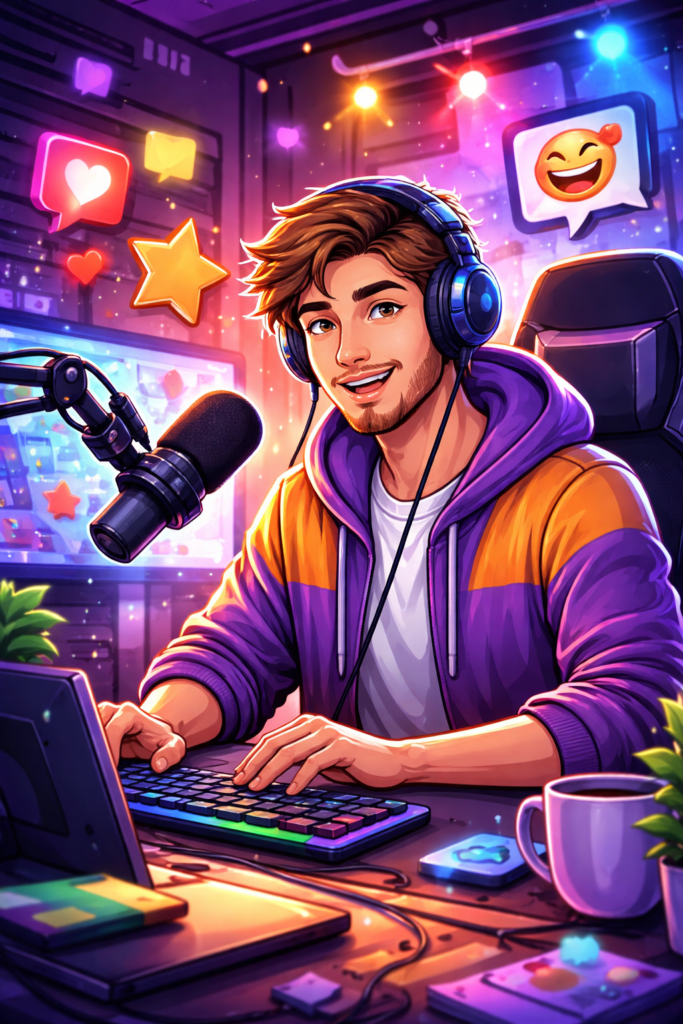
Why a Streamer’s Personal Brand Became a Key Factor in 2026
In 2026, streaming is no longer just about gameplay or casual conversations. Viewers no longer choose channels randomly — they choose people. That is why a streamer’s personal brand has become a key factor in growth, audience retention, and monetization. Today, viewers care not only about what happens on screen, but also about who is on the other side of the camera.
In the past, it was possible to stand out with high video quality or a popular game. Now, that is no longer enough. Even a technically perfect stream does not grow if the streamer lacks a clear image, personality, and positioning. A streamer’s personal brand is what separates one channel from hundreds of similar ones and makes viewers come back.
What a Streamer’s Personal Brand Really Means
A streamer’s personal brand is not a logo or a well-written profile description. It is a stable association that forms in a viewer’s mind when they see your nickname. A calm analyst, an emotional storyteller, a friendly conversationalist, or an ironic commentator — these are examples of brands, not roles.
It is important to understand that a personal brand is built through behavior, not words. How a streamer speaks, reacts to chat, handles difficult situations, and treats viewers shapes their image. If the image does not match reality, viewers notice it and leave.
Where Building a Streamer’s Personal Brand Begins
The first step is an honest answer to a simple question: how should viewers remember you? Not as “successful” or “popular,” but in a specific way. For example, as someone who always interacts with chat, or someone who explains complex things in a simple and clear manner.
Many beginners make the mistake of trying to be “like everyone else.” As a result, the channel becomes faceless. A streamer’s personal brand starts where a clear idea appears: why should a viewer watch you specifically? Even a simple but clear idea works better than trying to please everyone.
Why Authenticity Matters More Than a Perfect Image
In 2026, viewers are tired of artificial personas. A perfectly constructed but unnatural streamer quickly loses trust. A strong streamer personal brand is built on authenticity, not on wearing a mask.
This does not mean sharing everything. It is about consistency. If a streamer is naturally calm, there is no reason to pretend to be an aggressive entertainer. If communication is the core format, it should be strengthened rather than hidden behind gameplay.
Viewers value predictability of character. They come not for surprises, but for the feeling of a familiar person.
How a Personal Brand Influences Growth and Recommendations
Streaming platform algorithms are directly tied to audience behavior, and audience behavior depends on the streamer’s brand. When viewers return, chat actively, and recommend the channel to others, the platform receives a strong quality signal.
A strong streamer personal brand increases retention. A viewer may arrive from a clip or search, but they stay because of personality. That is why channels with smaller live audiences but a strong brand often grow faster without advertising budgets.
The Role of Communication in Building a Personal Brand
Communication is the main tool of a streamer’s brand. Tone of voice, humor, reaction to criticism, and the ability to remember viewers all shape perception. Even one regular viewer can become part of the brand if they feel noticed.
It is important not just to read chat, but to interact with it. Comment on messages, ask questions, and involve viewers in conversation. This creates a sense of live dialogue rather than background noise.
How Content Outside the Stream Strengthens the Brand
In 2026, a streamer’s personal brand does not end with live broadcasts. Short videos, clips, and posts are extensions of the same image. If you are calm and ironic on stream but aggressive on social media, the brand breaks.
Content outside the stream should reinforce the core trait of the brand. It should not directly sell the channel, but show personality. This is how viewers decide to come to a live stream.
Mistakes That Prevent Building a Streamer’s Personal Brand
One of the biggest mistakes is copying others, even successful streamers. Someone else’s style does not work long-term because it is not yours. Another common mistake is constant switching between formats without explanation or logic.
A streamer’s personal brand takes time. It does not form in a week. But when a streamer stays consistent, viewers begin to associate the channel with a specific feeling — and that is the most valuable result.
How Long It Takes for a Personal Brand to Start Working
The first signs of a personal brand usually appear after one to two months of regular streaming. Viewers start leaving comments like “it feels cozy here,” “I like how you explain things,” or “I come for the conversation.”
After a few more months, the brand begins driving growth: viewers return on their own, bring others, and recommend the channel.
A Streamer’s Personal Brand as the Foundation of Long-Term Growth
In 2026, a streamer’s personal brand is not an extra — it is the foundation. Without it, growth is unstable and fully dependent on algorithms. With it, a channel becomes resilient and the audience loyal.
Building a personal brand is not about being perfect. It is about clarity, honesty, and consistency. Streamers who follow this path grow faster, retain viewers more effectively, and turn streaming into a long-term project rather than a lucky accident.