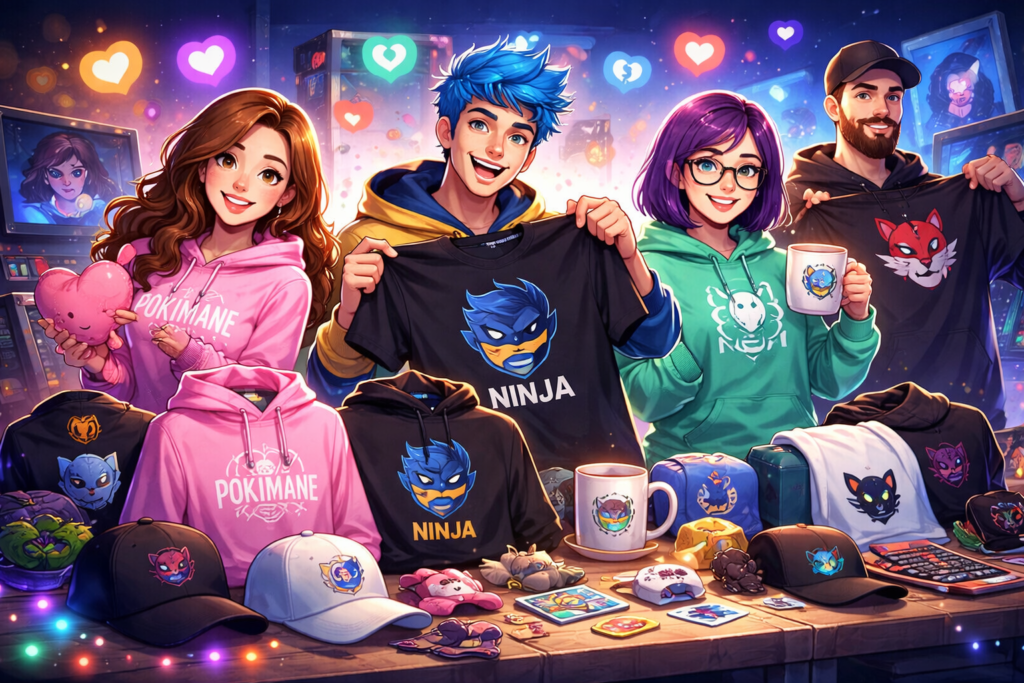
Just a few years ago, merchandise was considered a privilege of show business stars. Today, everything has changed. Streamer merch has become a full-fledged income tool and a way to strengthen a personal brand, even for creators with a mid-sized audience. T-shirts, hoodies, accessories, and digital products are no longer just items but a way to communicate with viewers and build a community.
In this article, we explore which streamer merch cases turned out to be successful, why some launches take off while others fail, and what actually works in practice rather than just in theory.
Why Streamer Merch Has Become So Popular
Streamer audiences are known for their high level of engagement. Viewers spend hours watching live streams, getting used to the creator’s communication style, catchphrases, jokes, and overall persona. At some point, a streamer becomes more than just a content creator and turns into part of the viewer’s daily routine.
That is why merch for streamers works differently from traditional branded products. People are not buying an item — they are buying a sense of belonging. Successful cases show that merch sells best when it reflects the streamer’s personality and the values of their audience.
Streamer Merch as Part of a Personal Brand
One of the most common mistakes beginners make is seeing merch as a quick way to earn money. In reality, successful streamer merch is an extension of the creator’s image. It grows naturally out of the content rather than existing separately from it.
Streamers known for humor often base their merch on catchphrases and memes. Those associated with cozy streams and close interaction usually choose minimalist designs that do not look flashy. These approaches appear most often in successful streamer merch cases.
Successful Streamer Merch Cases: What the Best Examples Have in Common
A closer look at successful streamer merch launches reveals a clear pattern: none of them were released suddenly or without preparation. Before launch, creators warmed up their audience, discussed ideas during streams, gathered feedback, and shared the creation process.
As a result, viewers felt like participants rather than just buyers. This significantly increased trust and the willingness to support the project financially. In many cases, the first merch drops sold out thanks to emotional engagement rather than aggressive advertising.
How Streamers Turn Merch into a Stable Income
In successful cases, streamer merch rarely starts with a single T-shirt. Over time, the product line expands carefully. Creators test demand, release limited editions, experiment with formats, and closely track audience reactions.
Importantly, merch is not pushed aggressively. It blends naturally into the content: streamers wear their merch during broadcasts, share stories behind the designs, and talk about their emotions. In this format, selling streamer merch feels natural and does not cause irritation.
Why Some Streamer Merch Cases Fail
Failed examples are also revealing. Most failures are not caused by print quality or logistics but by a lack of meaning. When merch does not reflect the streamer’s personality, the audience notices immediately.
Another common reason for failure is trying to copy someone else’s success. What works for one creator does not necessarily work for another. Successful streamer merch cases are almost always unique and built around a specific person rather than a universal template.
Streamer Merch and Audience Trust
Trust deserves special attention. Viewers are willing to buy merch only from creators they genuinely trust. That is why streamers who build honest, long-term relationships with their audience receive a much stronger response.
In successful cases, creators are transparent about pricing, product quality, and delivery timelines. They do not promise the impossible and do not disappear when problems arise. This approach turns merch purchases into a form of support rather than a simple transaction.
How Beginner Streamers Can Replicate a Successful Case
It is important to understand that streamer merch is not a goal but a tool. Beginners should start not with production but with audience analysis. What jokes do viewers repeat? Which phrases become iconic? What is strongly associated with you as a creator?
Successful cases show that even a small but loyal audience can deliver excellent results if the merch meets expectations. Selling one hundred items to your own viewers is often better than selling a thousand to random buyers.
Examples of Streamers and Their Successful Merch Cases
1. Pokimane — One of the Most Recognizable Streamers with Successful Merch
Pokimane is one of the biggest Twitch stars with millions of followers. Her merch includes T-shirts, hoodies, caps, and accessories that are in high demand thanks to a recognizable logo and strong visual identity. Fans actively share their purchases on social media, increasing organic reach.
The popularity of Pokimane’s merch is driven by strong brand recognition across the gaming community.
2. Ninja (Tyler Blevins) — An Icon of Streamer Merch Culture
Ninja is one of the most famous streamers in the world, largely due to his Fortnite streams. His merch has become a significant income source and a recognizable part of his brand.
Although exact sales figures are not publicly disclosed, Ninja’s products regularly sell out, and his signature color scheme has become a brand symbol.
3. TerrestrialPlays — Successful Merch with a Mid-Sized Audience
TerrestrialPlays sells merch despite having a relatively small audience. Her streams attract around 65–70 viewers and just over 450 followers. She started selling merch when her streams had around 10 viewers.
Today, a significant portion of her income comes from merch sales.
4. A Case Where Merch Generates Tens of Thousands of Dollars
There are documented cases where streamers generated over $20,000 in merch sales within the first six months without having a large audience.
Such results are usually achieved through strong design, limited drops, and active promotion during live streams.
5. Multi-Channel Merch Integration Examples
Esports organizations such as Giants have achieved over 8.5 million merch impressions during streams and generated 23,350 link clicks.
This demonstrates that merch can function not only as a product but also as a powerful engagement tool.
What Successful Streamer Merch Cases Show in Practice
- Big names bring stable sales and consistent demand
- Even mid-sized audiences can generate real income
- Quality interaction matters more than raw view counts