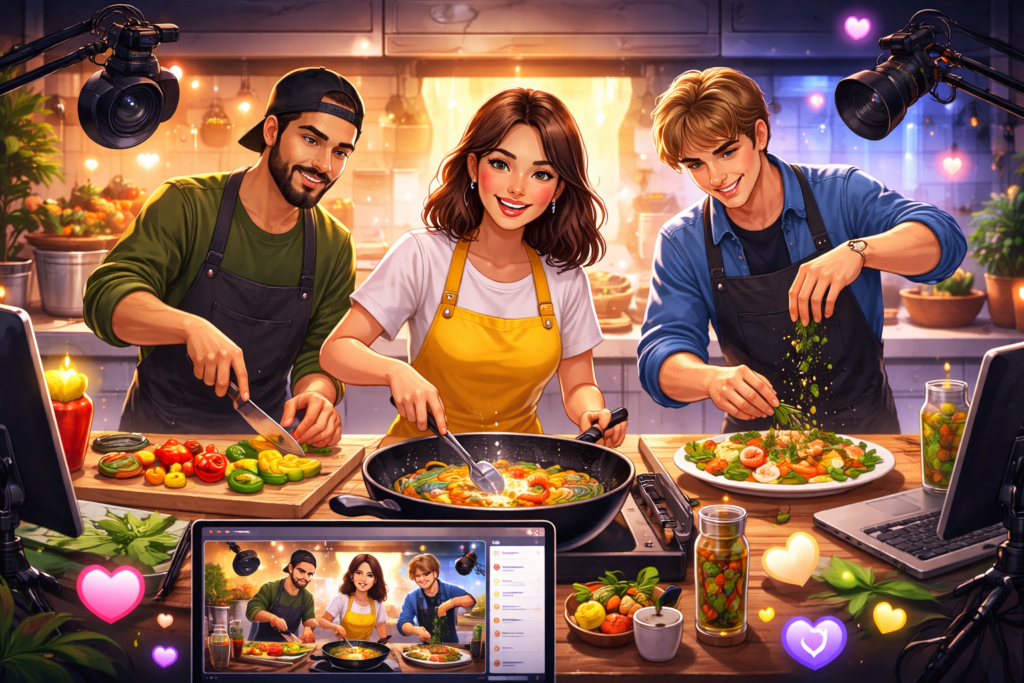
Until recently, cooking content was mainly associated with short recipes and edited videos. But by 2026, more and more viewers are choosing live cooking streams. The live cooking format has confidently taken its place in streaming and continues to grow rapidly. People want not only to see a beautiful final result, but to watch the process, mistakes, improvisation, and real emotions.
Live cooking streams have become a kind of alternative to traditional TV cooking shows. The difference is that there are no scripts, strict timing, or editing cuts — everything happens honestly and in real time.
Why Live Cooking Streams Have Become In Demand
The main reason for the popularity of live cooking streams is the sense of presence. Viewers are not just watching a recipe — they feel as if they are standing next to the streamer in the kitchen. They see ingredients being prepared, moments when things go off plan, and how the streamer finds solutions on the spot.
By 2026, audiences are increasingly tired of perfect visuals. People want simplicity and authenticity. Live cooking streams deliver exactly that: real cooking without filters, in an ordinary kitchen, with real ingredients and clear, understandable actions.
How Live Cooking Streams Differ from Regular Cooking Videos
The key difference is live interaction with the audience. During live streams, viewers can ask questions, clarify recipe details, suggest ingredient substitutions, or share their own experiences. This turns the stream into a dialogue rather than one-way content.
In addition, live cooking streams are not limited by strict formats. The streamer can pause, talk with the chat, discuss everyday topics, or even change the recipe during the stream. This unpredictability is what makes the format engaging and keeps viewers watching.
Who Watches Live Cooking Streams and Why
The audience for live cooking streams is much broader than it may seem. It is not only people who want to learn how to cook. Many viewers play these streams in the background while working, relaxing, or doing household tasks. Live cooking broadcasts create a cozy atmosphere similar to conversations in the kitchen.
For some viewers, practical value is important. They come for simple recipes, tips, and cooking hacks. Others watch live cooking streams for communication and relaxation. The format works equally well as both educational and entertainment content.
Why Live Cooking Streams Keep Viewers Watching Longer
Unlike short videos, live cooking streams naturally involve longer viewing sessions. Cooking takes time, and viewers gradually become engaged in the process. They wait for the final result, follow each stage, and stay in the stream longer than they initially planned.
The effect of shared activity also plays a role. When a streamer cooks together with viewers, it creates a sense of participation. People feel like they are not just observers, but part of the process.
Live Cooking Streams as a Format for Content Creators
For content creators, live cooking streams have a low entry barrier. There is no need for complex editing or expensive studios. A camera, microphone, and basic ingredients are enough to get started.
By 2026, many creators use live cooking streams as a way to build trust with their audience. Live cooking shows the person as they really are — how they think, react to mistakes, and communicate. This builds loyalty and keeps viewers coming back.
The Role of Communication and Atmosphere in Live Cooking Streams
Live cooking streams are rarely focused only on the recipe. Atmosphere plays a major role. Calm conversations, humor, everyday stories, and chat interaction create a sense of comfort. This is exactly why many viewers return regularly.
In 2026, live cooking streams often become evening content. People turn them on after work to relax and feel part of warm, friendly communication.
Why the Format Continues to Grow
The growth of live cooking streams is connected to a broader shift in how people consume content. Audiences increasingly value the process, not just the result. Live cooking fits this demand perfectly.
In addition, platforms actively promote long live streams with strong audience retention. Live cooking streams consistently show stable engagement metrics, making them valuable for streaming ecosystems.
The Future of Live Cooking Streams
Based on current trends, live cooking streams will continue to develop. The format will become more diverse while preserving its core elements — live interaction and an honest process.
By 2026, live cooking streams are no longer an experiment. They represent a well-established niche that combines education, entertainment, and communication in one format.
What Keeps Audiences Watching Live Cooking Streams
Live cooking streams satisfy a basic human need for shared activity and communication. Cooking has always been a social process, and streaming has simply brought it into the digital space.
That is why the live cooking format continues to grow in popularity. Live cooking streams offer viewers not only recipes, but also a sense of warmth, participation, and real moments that are often missing in today’s internet.