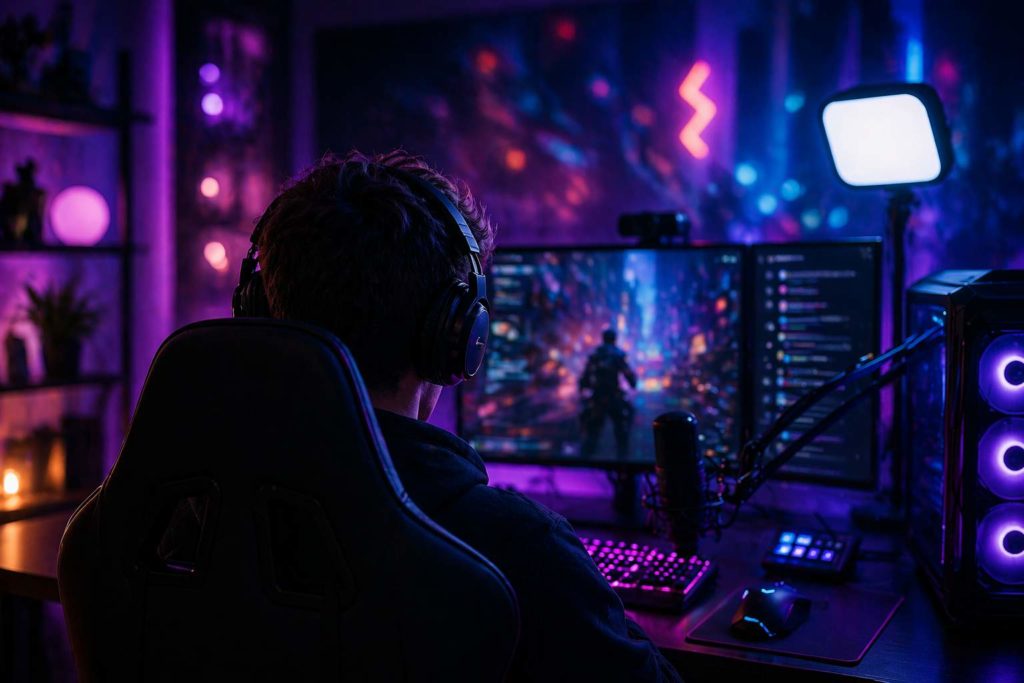
The first impression of a Twitch channel forms faster than most streamers expect. Not within minutes, not during the first five minutes of a stream, but within seconds — the moment a viewer sees the thumbnail, clicks, and enters the stream. At that point, they haven’t evaluated your content, haven’t heard you properly, and don’t understand what’s really happening. They are simply answering one question: is this worth staying for? And that decision is usually made before your stream even has a chance to “show itself.”
This creates a paradox that many streamers overlook: your content can be decent, but your channel doesn’t grow because it fails at the first perception stage. Viewers don’t give you time to “warm up.” They either stay immediately or leave. That’s why first impression is not a minor detail or a superficial layer — it’s the point where growth either begins or stops.
Why Viewers Don’t Give a Second Chance
On Twitch, there is no mechanism where viewers come back to “re-evaluate” a stream later. The behavior is simple: open — assess — decide. If something doesn’t match at that moment — expectations, pacing, or overall feeling — they leave and usually don’t return.
This is important because many streamers rely on a gradual effect: “people will come, get used to it, and eventually stay.” But without a strong first impression, this process never starts. Not because the stream is bad, but because it wasn’t perceived as worth attention.
The key idea here: viewers don’t compare deeply. They choose what feels clearer and easier to understand instantly.
How First Impression Actually Forms
First impression is not a single element. It’s a combination of signals processed almost instantly: thumbnail, stream title, the first seconds inside the stream, overall visuals, presence of voice, movement, and reactions.
If one of these elements fails, the whole perception breaks. For example, a strong thumbnail brings a viewer in, but silence inside the stream makes them leave. Or the stream is active, but the thumbnail doesn’t communicate anything — and viewers never click.
Viewers don’t analyze this in parts. They don’t think, “good thumbnail, weak start.” They feel one thing: “this works” or “this doesn’t.”
Why the First Seconds Matter More Than the First Minutes
One of the most common mistakes is treating the start of a stream as a warm-up phase. Setting things up, checking audio, “getting into rhythm,” waiting for viewers. It feels logical: if no one is watching yet, you don’t need to perform.
But viewers never see a “beginning.” They join at random moments and perceive them as a full stream. If that moment looks like preparation, they won’t wait for the “real” content to start. They just leave.
That’s why the first seconds are already your stream. No exceptions. No “starting soon.” No pauses.
If there is no voice, movement, or reaction at that moment — the first impression is already lost.
The Role of Visuals in First Perception
Visuals work before content. Your thumbnail, banner, and overall channel look create expectations before the stream even starts.
If your thumbnail is overloaded, unclear, or doesn’t communicate anything, viewers don’t click. If they click and see a chaotic or empty visual inside, it creates the impression that the stream itself is the same.
Viewers don’t evaluate design quality — they evaluate clarity. Is it clear what’s happening? Does it feel alive? Does it match expectations?
If visuals don’t provide clarity, they don’t work.
Why Audio Shapes Impression Faster Than Video
Many streamers focus on visuals: quality, lighting, overlays. But at a perception level, audio plays a more important role.
If viewers hear a voice — even simple but stable — it creates presence. If there is no sound or it’s poor quality, it creates distance. The stream feels “empty.”
Average visuals with good audio can hold attention. Great visuals with bad audio push viewers away.
This directly affects first impression.
The Feeling of a “Live” Stream as a Key Factor
The most important signal for a viewer is the feeling that the stream is alive. That something is happening right now, not just a static image.
This is created through voice, reactions, movement, and pacing. Even with low viewer count, the stream should feel active.
If there are pauses, waiting, or “nothing happening,” it is instantly noticeable.
That’s why a stream with 2–3 viewers can retain better than one with 20 if it feels alive.
Why Mismatch Destroys First Impression
One of the most subtle but critical issues is inconsistency between elements. The thumbnail promises one thing, the stream delivers another. The banner looks dynamic, but the stream is silent. The title is intriguing, but nothing happens.
Viewers don’t consciously analyze this, but they feel the disconnect. Expectations don’t match reality — and trust drops.
First impression is built on consistency. Everything should communicate the same thing.
How to Improve First Impression in Practice
The key is not adding more, but removing unnecessary elements and strengthening core signals.
- Eliminate pauses at the start of the stream. Avoid moments where nothing is happening.
- Simplify your thumbnail. Make it readable, not just visually appealing.
- Control your audio. It should be stable, without spikes or drops.
- Make your stream understandable at any moment. No need for context.
- Test yourself as a viewer. Open your stream for 10–15 seconds with no context and honestly ask: would you stay?
Why First Impression Is Not a One-Time Setup
Many streamers think it’s enough to “fix things once.” But first impression is not a static element — it’s a process.
Every stream is a new first impression for new viewers.
If things worked once but later you have pauses, drops in energy, or inconsistencies — the effect disappears.
This is not a setup, but a habit. A behavior that repeats every stream.
First Impression as the Entry Point to Growth
Growth on Twitch doesn’t start with algorithms, not with a lucky stream, and not with chance. It starts at the moment a viewer decides to stay.
And they stay only when the first impression matches or exceeds their expectations.
If this stage fails, nothing else matters — because viewers never get far enough to see it.
That’s why working on first impression is not about “improving visuals,” but about optimizing the entry point into your growth system. When this entry point works, even a small flow of viewers becomes a foundation for consistent growth.