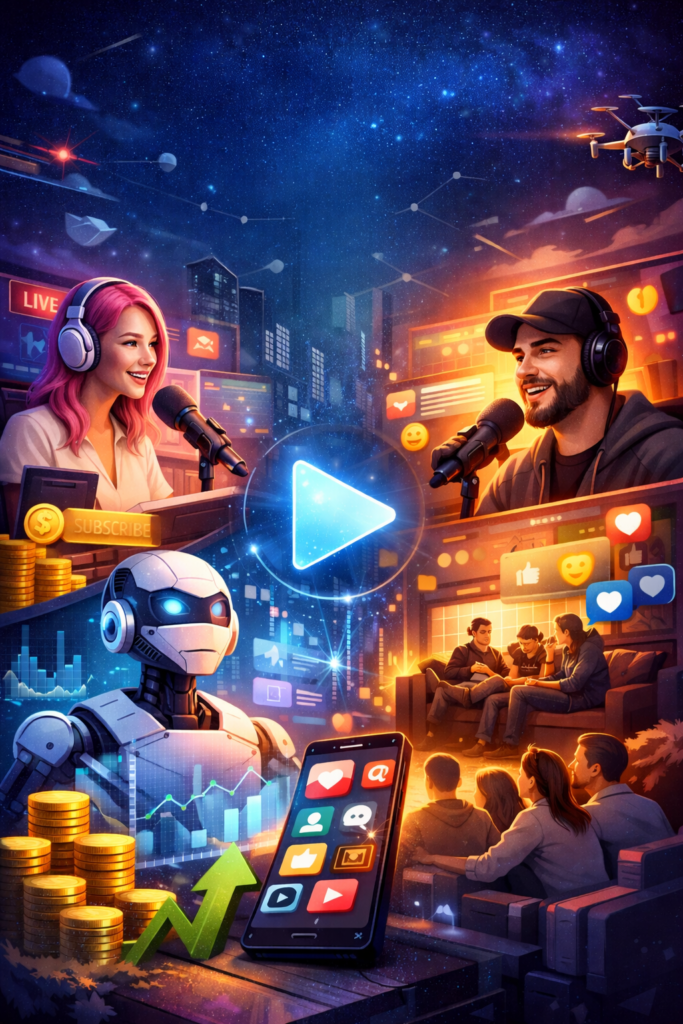
Streaming in 2026 as the New Standard of Digital Content
Just a few years ago, streaming was seen as a niche format mainly for gamers and enthusiasts. By 2026, the situation has completely changed. Streaming has become the dominant way people consume content, and live broadcasts are now a natural part of everyday digital life for millions. Today, streaming goes far beyond gaming and includes education, work, shows, news discussions, and even everyday activities.
The future of streaming in 2026 is not driven by sudden technological breakthroughs but by the steady evolution of audience habits. People want live communication, genuine emotions, and a sense of presence. That is why streaming continues to grow faster than other content formats.
Why the Future of Streaming Is Built on Live Interaction
The key factor shaping the future of streaming is the change in audience expectations. Viewers are tired of overly polished content and repetitive videos. In 2026, authenticity matters more than perfect visuals. What people value most is the real person behind the screen.
Live streams create a sense of dialogue. Viewers can ask questions, influence what happens on screen, and feel involved in the process. This emotional connection cannot be replicated by pre-recorded videos. Live interaction is what makes streaming the leading content format and defines its direction.
Trend 1: Streaming as an Ecosystem, Not a Single Broadcast
One of the most important streaming trends in 2026 is the transformation of live streams into full content ecosystems. Modern streamers are no longer limited to live broadcasts alone. The stream becomes the central hub, supported by clips, short videos, social media, and active communities.
Viewers may not watch entire streams, but they regularly consume highlights and return during key moments. This approach improves audience retention and makes channels more resilient in a highly competitive environment.
The future of streaming is no longer about one broadcast and one chance, but about constant presence across digital platforms.
Trend 2: Content Personalization and Niche Audiences
By 2026, mass streaming is giving way to niche-focused content. Audiences have become more selective. People choose streamers not based on popularity, but on shared interests, values, and communication style.
The future of streaming is closely tied to personalization. Platform algorithms are becoming more accurate at matching content to individual users, while streamers increasingly focus on narrow topics such as specific games, professions, communication styles, or streaming formats.
This allows even small channels to grow steadily and compete with larger creators through depth of content rather than scale.
Trend 3: AI and Automation in Streaming
Artificial intelligence has become an integral part of streaming in 2026, though its role differs greatly from early expectations. AI does not replace the streamer; instead, it removes routine tasks.
Automated chat moderation, smart prompts, audience behavior analysis, clip generation, and content recommendations allow streamers to focus on what truly matters: communication and content. The future of streaming lies in the collaboration between humans and technology, where AI enhances creativity rather than replacing it.
Trend 4: The Rise of Conversational and Relaxed Streams
In 2026, there is a noticeable rise in formats that prioritize atmosphere over constant action. Conversational streams, co-working sessions, discussions, and background streams are becoming increasingly popular.
This trend reflects modern lifestyles. Streams are often played alongside work or relaxation. Viewers value consistency and presence more than nonstop excitement. The future of streaming is built around comfort, not endless hype.
Trend 5: Streaming Economics and Sustainable Income
The future of streaming in 2026 is closely connected to economics. Streaming is no longer a gamble. More creators are building predictable and sustainable income models.
Subscriptions, donations, paid participation formats, educational content, and brand partnerships diversify revenue streams. Audiences are more willing to support streamers they feel emotionally connected to, making streaming a stable source of income rather than a one-time success.
Trend 6: Communities Matter More Than Viewer Count
One of the most underestimated streaming trends in 2026 is the shift from viewer numbers to community quality. Channels with smaller audiences but active and loyal communities often outperform larger, impersonal streams.
The future of streaming belongs to communities where viewers know each other, participate in channel life, and return out of habit rather than algorithmic recommendations.
Why the Future of Streaming Has Already Arrived
It is important to understand that the future of streaming is not a prediction — it is the reality of 2026. All key trends are already in motion. What continues to change is their scale and level of integration.
Streaming evolves not because of technology alone, but because of people. As long as audiences value live interaction, streaming will remain the dominant content format.
What Truly Defines Streaming Success in 2026
The main streaming trend of 2026 is the shift from content to relationships. Streaming is no longer about formats, technology, or hype, but about building lasting connections between streamers and their audiences. Viewers stay where they feel seen, heard, and included. The ability to build trust, maintain dialogue, and create a sense of belonging has become the key driver of growth. In 2026, the most successful channels are not the loudest or the most technically advanced, but those that turn streaming into meaningful human interaction that people want to return to again and again.