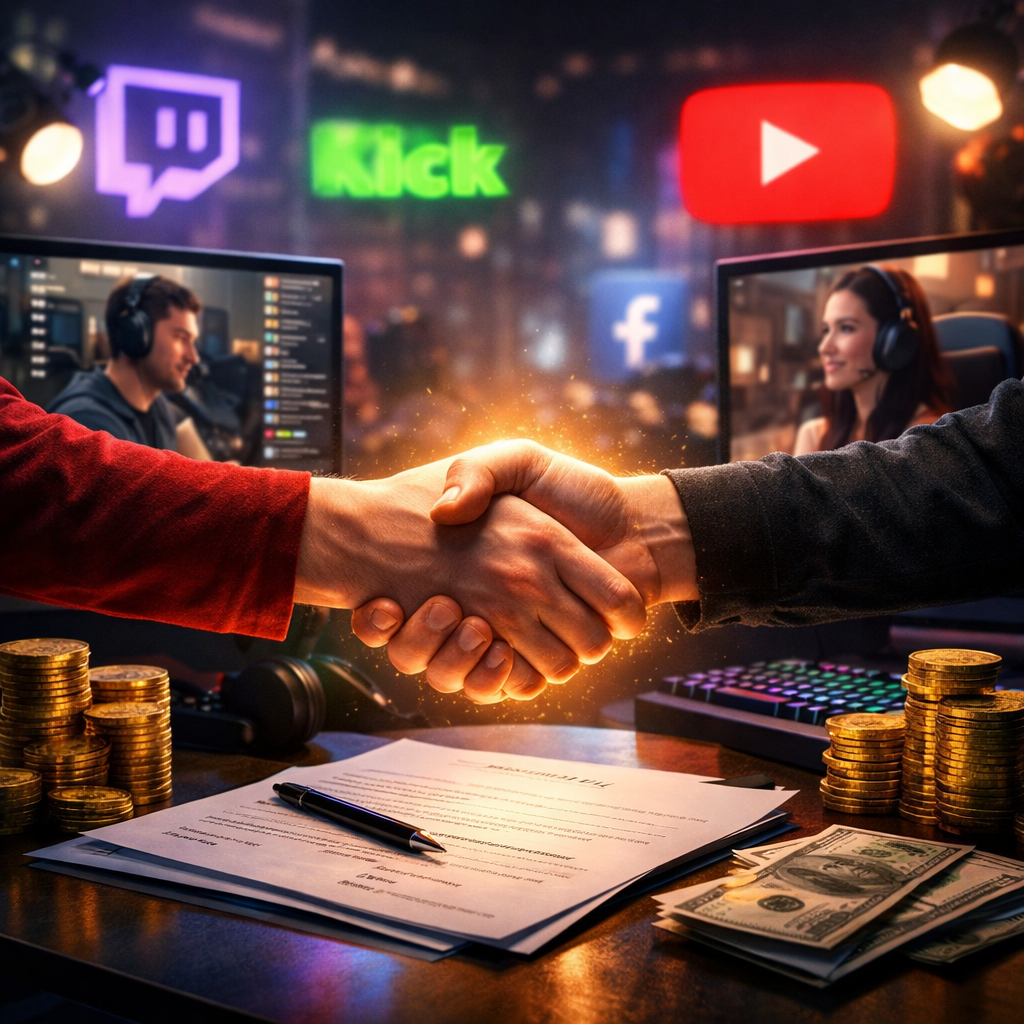
Exclusive Streaming Contracts with Platforms in 2026
Just a few years ago, exclusive contracts between streamers and platforms seemed accessible only to a select few. By 2026, the situation has changed. Streaming has become a full-scale business, and exclusivity agreements are now one of the main tools platforms use to compete for audience attention, influence, and revenue.
Today, exclusive streaming contracts are no longer just about “not streaming elsewhere.” They are complex agreements that define content format, streaming schedules, a streamer’s income, and even their public image. For some creators, these contracts become a fast track to financial security and large earnings. For others, they can limit long-term growth.
To understand how exclusive streaming contracts work in 2026, it’s important to look at the types of deals available, why platforms offer them, and why streamers choose to sign.
Why Platforms Pay for Exclusivity
The main reason behind exclusive contracts is competition for attention. In 2026, streaming platforms are not just fighting to attract new creators, but to secure loyal audiences. When a popular streamer signs an exclusive deal, their entire community often follows.
For platforms, an exclusive streamer means:
- stable and predictable traffic,
- higher watch time,
- stronger brand positioning,
- a clear competitive advantage.
For streamers, exclusivity offers guaranteed income and reduced financial risk. This is why exclusive streaming contracts have become a standard option for mid-size and top creators.
Types of Exclusive Streaming Contracts
In 2026, there are several common types of exclusivity agreements in streaming.
Full Exclusivity
The most restrictive model. The streamer is required to broadcast live only on one platform. Streaming on any other service is fully prohibited.
This type of contract is usually offered to top-tier creators with millions of followers. In return, streamers receive a fixed payout, performance-based bonuses, and additional promotional support.
Partial Exclusivity
A more flexible option. The streamer must conduct a certain number of streams on the main platform but is allowed to post clips, short videos, or occasional content on other platforms.
This model is especially popular in 2026 because it allows streamers to maintain audience growth through social media while still benefiting from exclusivity.
Time-Limited Exclusive Agreements
Contracts that last from several months up to a year. These are often used when platforms launch new features or test new growth strategies.
For streamers, this format offers a way to try exclusive cooperation without long-term commitments.
Format-Based Exclusivity
In some cases, exclusivity applies only to a specific show, tournament, or content format. For example, talk shows may be exclusive to one platform, while gaming streams remain unrestricted.
Examples of Exclusive Contracts with Global Streamers
On the global market, exclusive contracts have long been part of the streaming industry.
Ninja is one of the most well-known examples. His exclusive deals over the years demonstrated how highly a personal brand can be valued. These agreements included not only financial compensation but also large-scale marketing campaigns.
Shroud also signed exclusive contracts focused on full platform exclusivity and participation as a brand ambassador.
In 2026, xQc operates under a hybrid model. His agreements are built around partial exclusivity, allowing him to maintain massive reach while still securing guaranteed income.
Exclusive Streaming Contracts in the CIS Region
In the CIS region, exclusive contracts appeared later but have become common by 2026.
Evelone is an example of a streamer working under partial exclusivity. His main streams take place on one platform, while clips and short-form content are actively used to attract new audiences.
Buster has worked under contract-based models at different times, where key factors included a minimum streaming volume and participation in platform-led projects.
In the CIS market, contracts tend to be more flexible. Platforms recognize that streamer growth heavily depends on external social media and are less focused on strict isolation.
What Streamers Receive from Exclusive Contracts
Exclusive streaming contracts in 2026 are not just about money. They usually include:
- a fixed monthly payment,
- bonuses tied to viewership and activity,
- priority placement in platform recommendations,
- technical and production support,
- participation in advertising campaigns.
For many creators, exclusivity means financial stability. Even during temporary drops in viewership, income remains predictable.
Risks of Exclusive Streaming Contracts
Despite clear advantages, exclusive contracts also carry risks.
The main risk is reduced flexibility. If a platform loses popularity or changes its algorithms, the streamer remains locked into a single ecosystem.
The second risk is slower audience growth. Limiting presence on other platforms can reduce exposure to new viewers.
That’s why in 2026 more streamers choose partial exclusivity instead of full exclusivity.
Why Exclusive Contracts Are Not for Everyone
It’s important to understand that an exclusive contract is a business tool, not a universal measure of success. For small and mid-sized channels, exclusivity can be premature.
An exclusive deal makes sense only when a streamer already has:
- a stable audience,
- a recognizable personal brand,
- a clearly defined content format.
Without these factors, exclusivity can limit growth instead of accelerating it.
Exclusive Streaming Contracts in 2026
By 2026, exclusive streaming contracts are no longer rare. They are a standard part of platform strategy and a conscious choice for creators.
Some streamers choose full exclusivity for stability. Others prefer hybrid models to continue growing their reach. In every case, success depends not on the size of the payout, but on how well the contract aligns with the streamer’s long-term goals.
Exclusivity is no longer about “selling out to a platform.” It’s a strategic business decision that can either strengthen a career or slow it down if made without a clear understanding of the consequences.